Required Safety Functions and Safe States: Safety-function definition guide
How should required safety functions and safe states be investigated before specifying safety relay upgrades?
In brief
For Safety Relay Upgrades, define the operating conditions for required safety functions and safe states: the normal state, credible extremes, how the relevant values or conditions are measured, and which decision or outcome they affect.
For replacement or redesign of defined safety-relay functions, describe the realistic range and how changes in required safety functions and safe states affect the result you need.
On the production floor
Turn your production information into clearer decisions — Safety Relay Upgrades
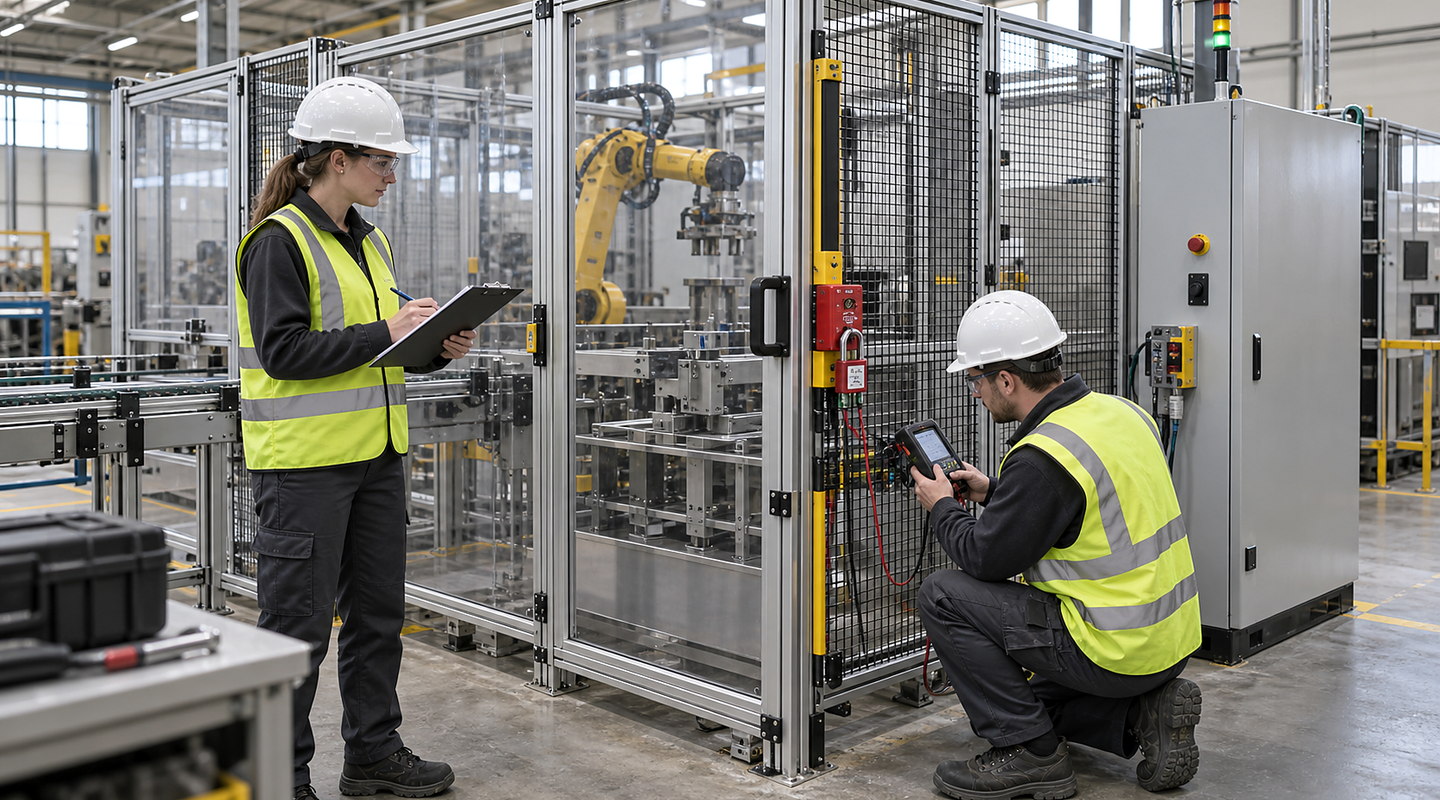
Plan a safety relay upgrade around the required safety functions, device inputs, safe outputs, reset and restart behaviour, diagnostics, wiring changes and validation evidence. Use this guide to resolve required safety functions and safe states before it limits the final system.
Required Safety Functions and Safe States: condition, range and effect on your process
Current condition
Describe how you observe or measure required safety functions and safe states in your operation, including sample condition and any measuring limits. For a project focused on safety-relay replacement and redesign, also record the production state in which each observation was made.
Realistic range
For Safety Relay Upgrades, include normal production conditions, credible extremes, product or part variants and changes over time.
Effect on the system
Show which settings, safeguards, maintenance tasks, decisions or required outcomes are affected by changes in required safety functions and safe states.
Before you contact us
Five questions about required safety functions and safe states for your application
Who can confirm this information?Identify the person responsible for required safety functions and safe states in production, quality, engineering or operations.
How representative is the sample?Include age, supplier, batch, environment and upstream process state where they affect safety relay upgrades.
What is the difficult condition?Include the slow, reflective, flexible, dirty, damaged, marginal or uncommon case that your system must still handle.
How will you judge the result?Agree the method, repetitions, acceptable range, result record and the response if the observed result falls outside the agreed range.
What else must be coordinated?Your final safety relay upgrades scope must also account for fault diagnostics, restart and recovery behaviour, wiring drawings, settings and validation evidence, current regulations and the conditions at your site.
Connected details
Review required safety functions and safe states as part of the complete system
Question 1
Required Safety Functions and Safe States
For Required Safety Functions and Safe States: Safety-function definition guide, describe the current position, required outcome, acceptable limits and known exceptions for required safety functions and safe states. That lets us compare options against your real production rather than one nominal value.
Question 2
Device Inputs, Zones and Operating Modes
For Required Safety Functions and Safe States: Safety-function definition guide, describe the current position, required outcome, acceptable limits and known exceptions for device inputs, zones and operating modes. That lets us compare options against your real production rather than one nominal value.
Question 3
Relay Architecture, Monitoring and Reset Configuration
For Required Safety Functions and Safe States: Safety-function definition guide, describe the current position, required outcome, acceptable limits and known exceptions for relay architecture, monitoring and reset configuration. That lets us compare options against your real production rather than one nominal value.
Question 4
Contactors, Drives and Standard-Control Interfaces
For Required Safety Functions and Safe States: Safety-function definition guide, describe the current position, required outcome, acceptable limits and known exceptions for contactors, drives and standard-control interfaces. That lets us compare options against your real production rather than one nominal value.
Question 5
Fault Diagnostics, Restart and Recovery Behaviour
For Required Safety Functions and Safe States: Safety-function definition guide, describe the current position, required outcome, acceptable limits and known exceptions for fault diagnostics, restart and recovery behaviour. That lets us compare options against your real production rather than one nominal value.
Question 6
Wiring Drawings, Settings and Validation Evidence
For Required Safety Functions and Safe States: Safety-function definition guide, describe the current position, required outcome, acceptable limits and known exceptions for wiring drawings, settings and validation evidence. That lets us compare options against your real production rather than one nominal value.